By Collins Odhiambo Owino
Author | DatalytIQs Academy
Data Sources: IMF World Economic Outlook, World Bank Global Prospects Report (2025), and CBK/KNBS datasets.
The Big Picture
The global economy is entering 2025 on a modest but cautious trajectory. Despite progress in technology, energy transitions, and inflation stabilization, growth momentum remains fragile — hindered by trade tensions, policy realignments, and monetary tightening across major economies.
Key Global Highlights
| Indicator | 2025 Projection | 2026 Projection | Note |
|---|---|---|---|
| Global GDP Growth | 3.2% | 3.1% | Revised downward by 0.5 ppts due to US tariffs and weaker trade flows |
| Advanced Economies | 1.5% | 1.5% | Persistent inflation control and higher borrowing costs |
| United States | 2.0% | 1.8% | Slower consumer demand amid high interest rates |
| Emerging & Developing Economies | 4.4% | 4.3% | Asia remains the growth engine, led by India and Southeast Asia |
| Global Output Loss (Cumulative) | – | 0.2% by end-2026 | Trade restrictions and supply chain realignments weigh on productivity |
What’s Driving the Slowdown
-
Trade Tensions and Tariffs:
The reintroduction of US tariffs and countermeasures by major trading partners has reduced cross-border trade volumes and investment flows. -
High Global Interest Rates:
Central banks — especially the US Federal Reserve and the European Central Bank — maintain tight policies to keep inflation in check, limiting global liquidity. -
Shifting Supply Chains:
A gradual reorganization of production away from China toward emerging economies such as India, Vietnam, and Mexico introduces transitional inefficiencies. -
Energy and Climate Transitions:
Green energy investments continue to expand but face high upfront costs and geopolitical risks tied to critical minerals (lithium, nickel, cobalt).
Implications for Africa and Kenya
-
Weaker Export Demand: Lower global consumption slows demand for Kenya’s key exports (tea, coffee, flowers, and apparel).
-
Higher Borrowing Costs: Global rate hikes translate into higher domestic lending and debt servicing costs.
-
Currency Pressures: Reduced capital inflows may weaken the Kenyan shilling, reinforcing import-related inflation.
-
Opportunities in Regional Trade: The African Continental Free Trade Area (AfCFTA) offers a buffer, encouraging intra-African trade and localized value chains.
Kenya’s economic resilience will depend on how effectively it aligns with regional markets, boosts export value addition, and leverages green growth opportunities amid the shifting global order.
Data and Acknowledgment
Sources:
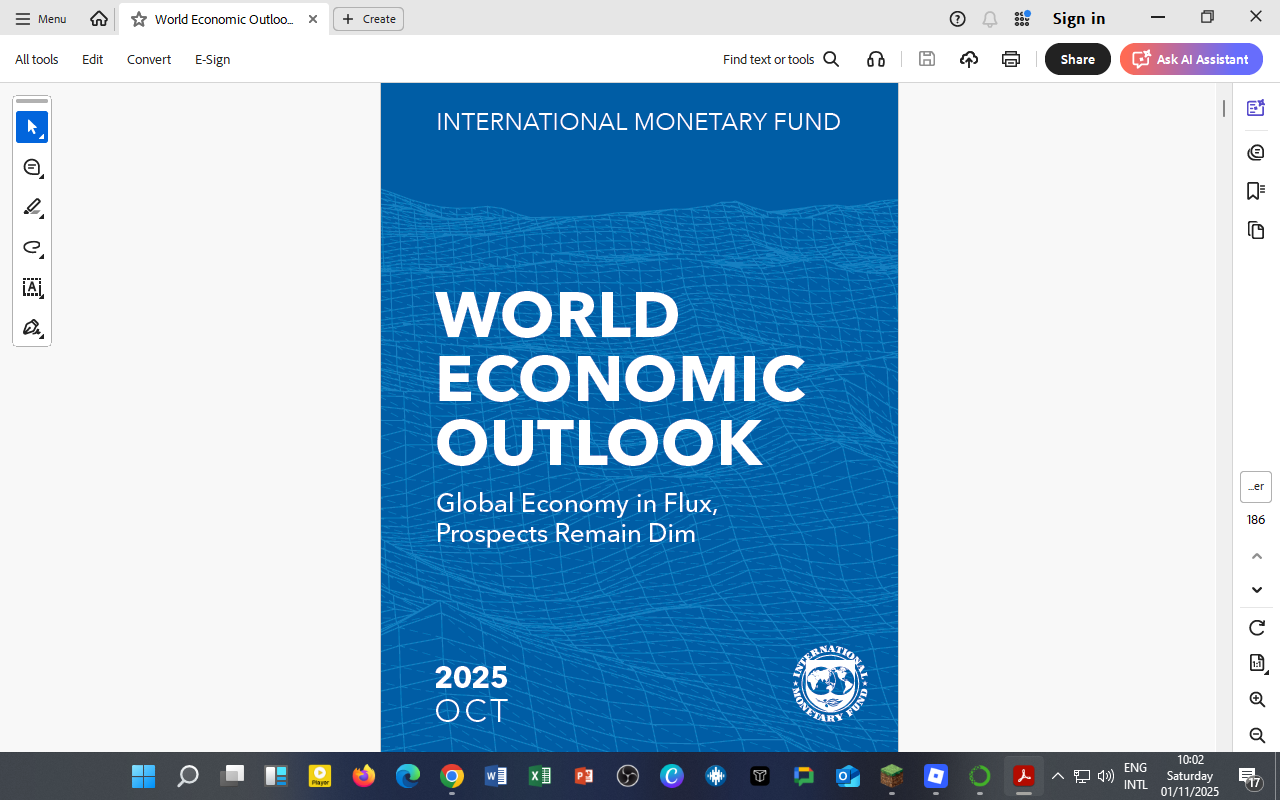
International Monetary Fund (IMF) World Economic Outlook, October 2025
World Bank Global Economic Prospects, 2025–2026
Central Bank of Kenya (CBK)
Kenya National Bureau of Statistics (KNBS)
Author: Collins Odhiambo Owino, DatalytIQs Academy
Leave a Reply
You must be logged in to post a comment.