
“How Temperature, Humidity, and Pollution Interact in the Global Atmosphere”
Weather is a delicate system of balance where heat, moisture, and particles constantly interact to shape the air we breathe.Using the Kaggle Global Daily Weather
“How Lunar Cycles Reflect Global Atmospheric Patterns”
The Moon has guided humanity for centuries, influencing tides, calendars, and even cultural rhythms. Using the Kaggle Global Daily Weather Dataset (2023–2024), we explored the
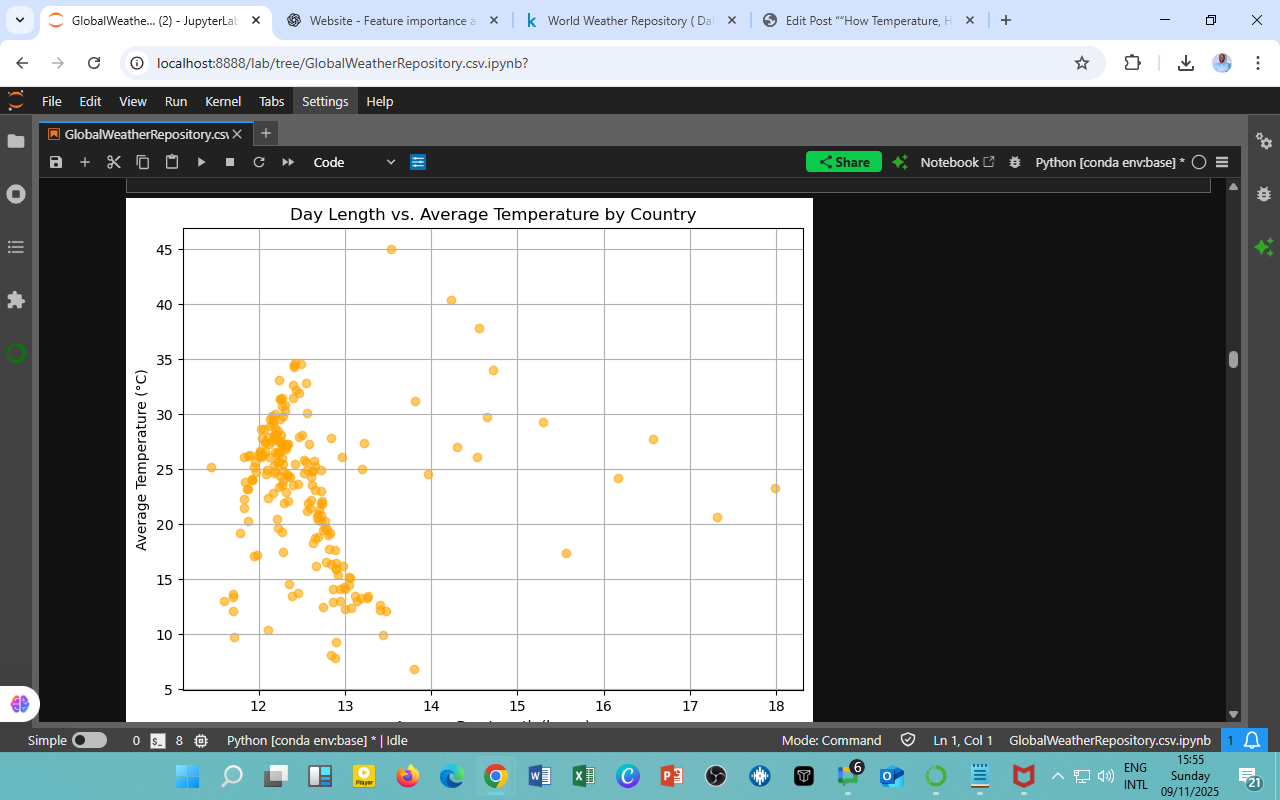
“Exploring the Relationship Between Day Length and Global Temperatures”
Sunlight is Earth’s most consistent source of energy, shaping temperature, seasons, and life itself. In this analysis from the Kaggle Global Daily Weather Dataset (2023–2024),
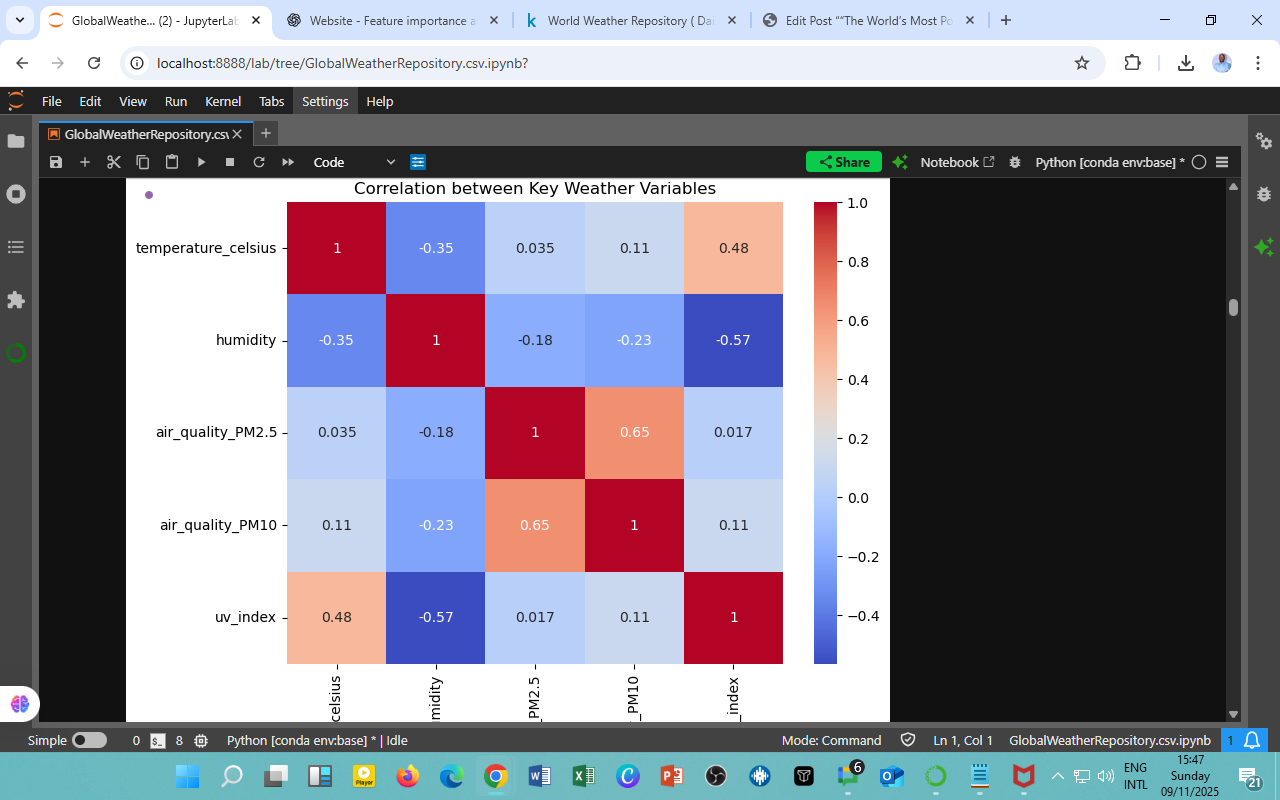
“How Temperature, Humidity, and Air Quality Shape Global Weather Dynamics”
Weather is a web of interlinked forces; temperature drives humidity, humidity influences air quality, and sunlight defines the UV index.Using the Kaggle — Global Daily
“From Scorching Sands to Frozen Frontiers: Mapping the World’s Hottest and Coldest Capitals (2023–2024)”
Temperature defines not only our comfort but also our climate, economies, and ecosystems.Using the Kaggle — Global Daily Weather Dataset (covering capital cities worldwide since
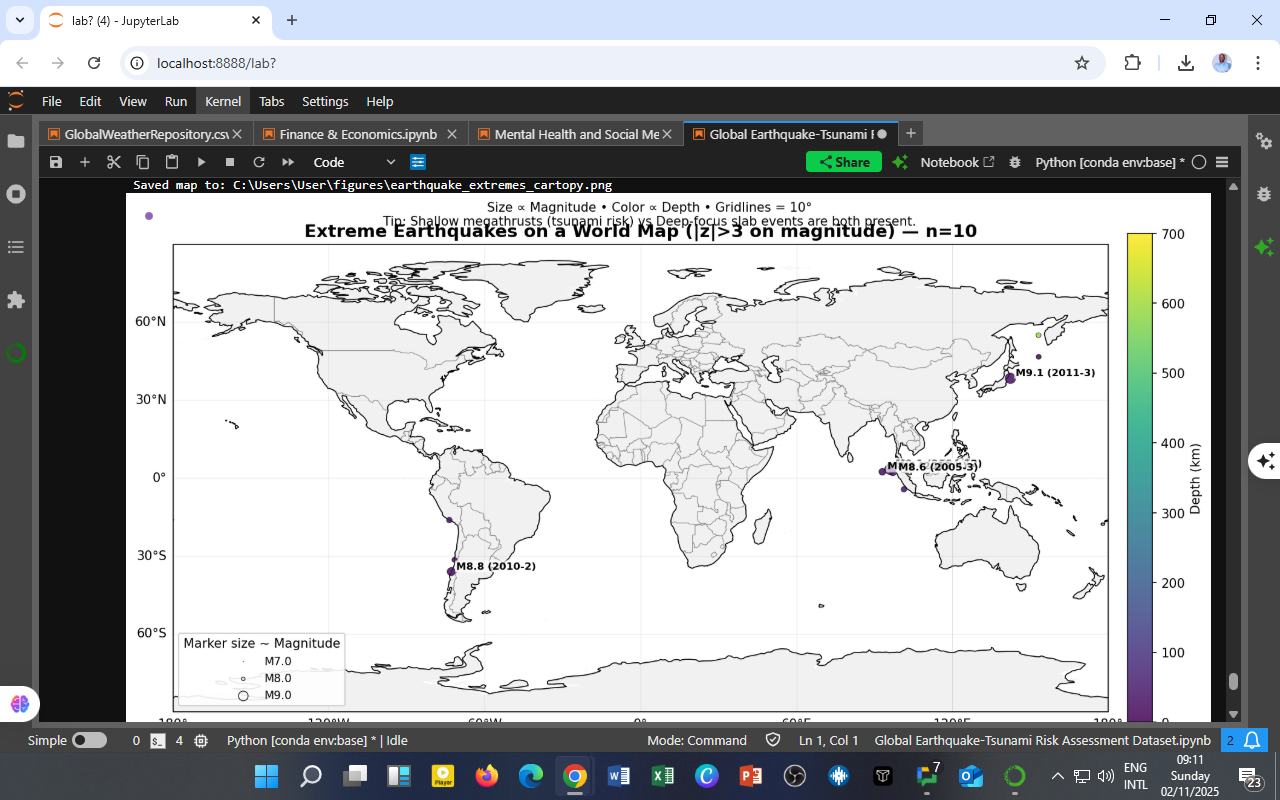
“Mapping the Pulse of the Planet: Insights from Global Weather Patterns (2023–2024)”
Weather is data in motion, revealing the planet’s heartbeat. The Kaggle — Global Daily Weather Dataset provides detailed weather information for capital cities worldwide, offering
BMW Pricing Elasticity and Performance Dynamics (2010–2024)
Overview To explore how BMW vehicle characteristics influence market performance, a multiple linear regression model was estimated using core predictors: ln_price – natural log of
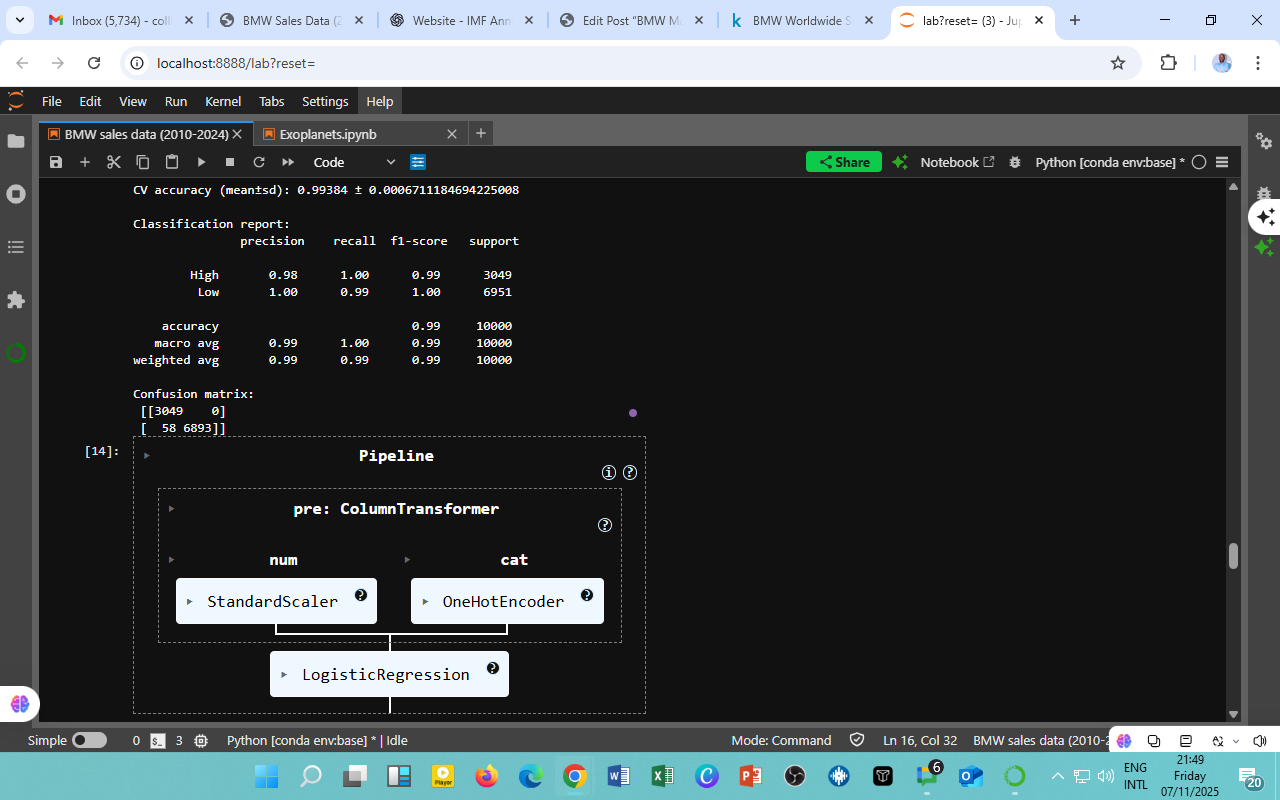
Predicting BMW Sales Classification (2010–2024) Using Logistic Regression
Overview To understand which vehicle attributes most influence whether BMW sales fall into high or low performance categories, a Logistic Regression classifier was trained on
BMW Market Segmentation (2010–2024): A K-Means Clustering Analysis
Overview To better understand BMW’s product and market segmentation, a K-Means clustering algorithm was applied to four key quantitative features: Price_USD Sales_Volume Engine_Size_L Mileage_KM The
BMW Sales Dataset Summary (2010–2024): Descriptive Insights
Overview The dataset contains 50,000 records with 11 attributes that describe BMW’s sales, pricing, and model characteristics across multiple regions and fuel technologies between 2010

You must be logged in to post a comment.