| Metric |
Year |
Suicide Rate (per 100,000) |
| Count |
5126 |
5126 |
| Mean |
2010.5 |
9.52 |
| Std Dev |
6.34 |
6.79 |
| Min |
2000 |
0.00 |
| 25th Percentile |
2005 |
4.96 |
| Median |
2010.5 |
7.67 |
| 75th Percentile |
2016 |
12.78 |
| Max |
2021 |
53.06 |
What the Numbers Reveal
1. A wide global disparity
Some countries record zero suicide deaths, while others exceed 53 per 100,000, showing vast differences in:
This variation underscores the need for country-specific strategies, not one-size-fits-all approaches.
2. The global median is relatively moderate
With a median of 7.67, over half of the countries fall below 10 deaths per 100,000. Yet, outlier nations significantly raise the global average.
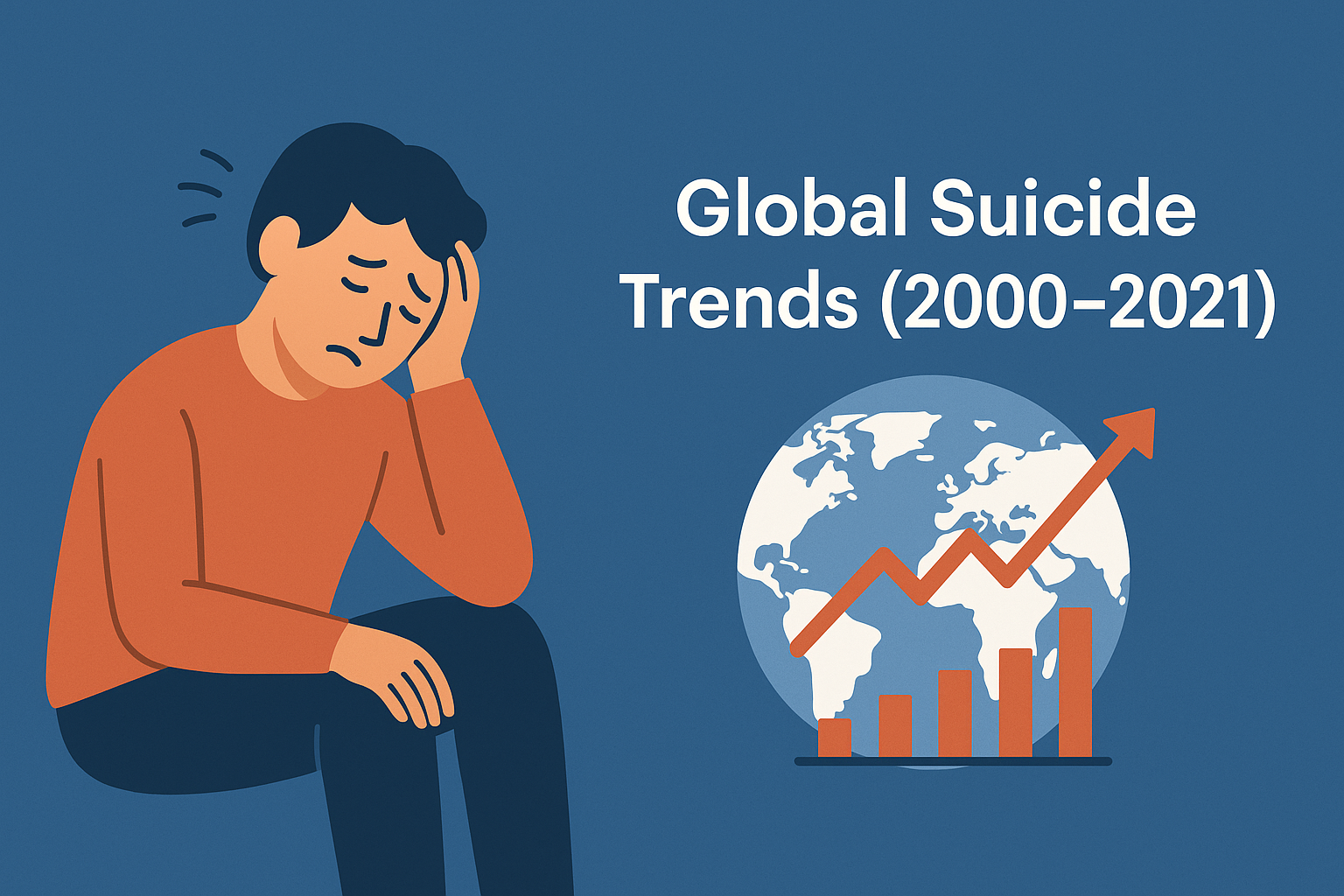
3. A steady upward shift in rates
The percentiles show how suicide rates have generally increased over time, especially in regions affected by:
Regional Reflections
Although the summary stats do not break down specific regions, global research aligns with the following trends:
Highest rates historically:
Lowest rates:
-
Middle Eastern regions
-
North Africa
-
Caribbean nations
Emerging concern:
High-income nations:
Lower-income nations:
Why These Trends Matter
Suicide is not only a mental-health issue; it is a social, economic, and governance issue.
It intersects with:
Countries that have launched strong suicide-prevention strategies (hotlines, school counseling, crisis centers, national policies) have shown measurable improvement.
What Needs to Be Done Globally
✔ Build community-level mental-health services
Accessible counseling can save lives.
✔ Address stigma
Making mental health a normal public conversation reduces barriers to seeking help.
✔ Strengthen youth support systems
Schools, universities, and social programs must protect young people.
✔ Improve socio-economic stability
People under financial stress face higher mental-health risks.
✔ Invest in crisis response
Hotlines, mobile mental-health units, and trained emergency responders are crucial.
Final Thoughts
The period 2000–2021 reveals a world grappling with rising psychological stress, social pressures, and uneven access to mental-health support. While the global average suicide rate sits at 9.5 per 100,000, the true picture is far more fragmented.
But the data also offers hope.
Countries that prioritize prevention, early intervention, and destigmatization do see declines. With the right strategies, global suicide numbers can be reduced as lives are saved.
Acknowledgment of Contributors
This analysis is made possible through:
-
Original data from the World Bank
-
Dataset compilation and cleaning by a Kaggle contributor
who made the dataset publicly available for research, education, and policy work.
Their commitment to open data has enabled global researchers and educators, including DatalytIQs Academy, to conduct meaningful mental-health analytics that inform global action.





You must be logged in to post a comment.