A groundbreaking series of studies is calling on the financial sector to rethink how it values nature. Published in a special issue of Ecological Economics, the research—led by Professor Ben Groom, Dragon Capital Chair in Biodiversity Economics at the University of Exeter Business School—warns that biodiversity loss poses profound risks to economic and financial stability.
According to Professor Groom, financial markets have long underestimated the economic significance of natural systems. Assets like equities, bonds, and loans are directly exposed to environmental degradation that can weaken the foundations of industries such as agriculture, tourism, and fisheries. The research identifies two main categories of biodiversity-related financial risk:
-
Physical risks — arising from degraded ecosystems that threaten productivity and returns.
-
Transition risks — resulting from regulatory and policy changes that force firms to adapt their operations.
Despite this two-way link between finance and nature, biodiversity remains marginal in financial decision-making, hindered by challenges in quantifying ecosystem services and misaligned fiduciary duties. “We’re questioning whether current market practices—while often compliant with fiduciary responsibilities—are sufficient to address the scale of biodiversity-related risks,” Professor Groom said. “Innovative approaches are needed that recognize nature’s critical role in sustaining economies and human well-being.”
One of the featured studies, led by Dr. Wei Xin with co-authors Professors Groom, Lewis Grant, and Chendi Zhang, analyzed ESG data from 2013–2020 and found that biodiversity ratings have little to no influence on investment decisions or firm performance. The findings suggest that biodiversity metrics are currently too weak and inconsistent to guide sustainable capital allocation. “We need high-quality biodiversity tools,” said Dr. Xin, “to help investors and fund managers internalize environmental costs and better assess firms’ biodiversity performance.”
Other papers in the series explore:
-
How biodiversity risks may be partially priced into markets, underscoring both progress and measurement challenges.
-
A new method for mapping financial portfolios’ impacts on ecosystem services, revealing that 42% of French investments are linked to sectors with high biodiversity loss risks.
-
A structured framework to evaluate the plausibility of nature loss scenarios, guiding strategic decision-making.
-
An assessment of European financial institutions’ biodiversity disclosures shows fragmented and inconsistent reporting practices.
Together, these studies emphasize the urgent need for innovative, science-based financial instruments and policy frameworks that integrate biodiversity into mainstream investment strategies.
At DatalytIQs Academy, we adapt such insights to train learners and professionals in sustainable finance, environmental economics, and risk analytics—equipping them with the analytical tools to align financial performance with ecological integrity and long-term global resilience.
Credits:
-
Author: Russell Parton (University of Exeter)
-
Editors: Gaby Clark, Andrew Zinin
-
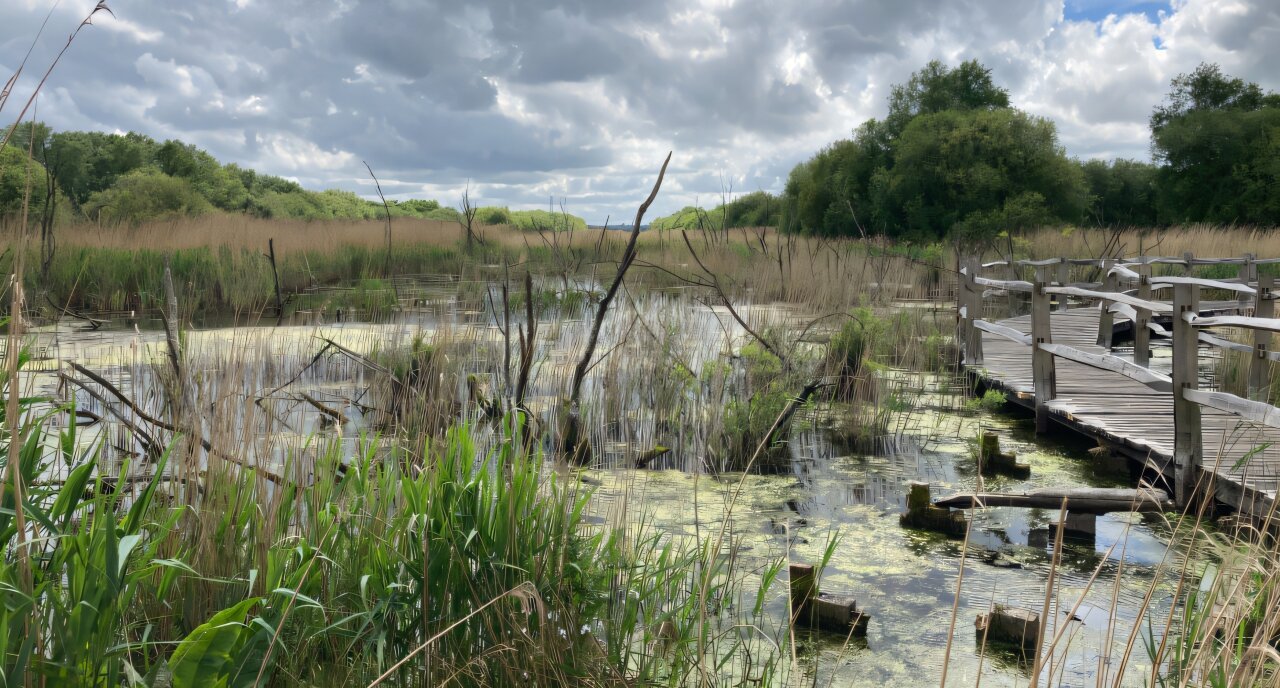
Image Credit: Susan Willis (Westhay Moor National Nature Reserve)
-
Adapted by: DatalytIQs Academy
Leave a Reply
You must be logged in to post a comment.