The Foundation Beneath Our Feet Is Failing
Modern agriculture has given the world record food yields — but at a growing hidden cost. A major global study by Rothamsted Research warns that intensive farming methods are eroding the very soil systems that sustain human life, threatening long-term food security and environmental stability.
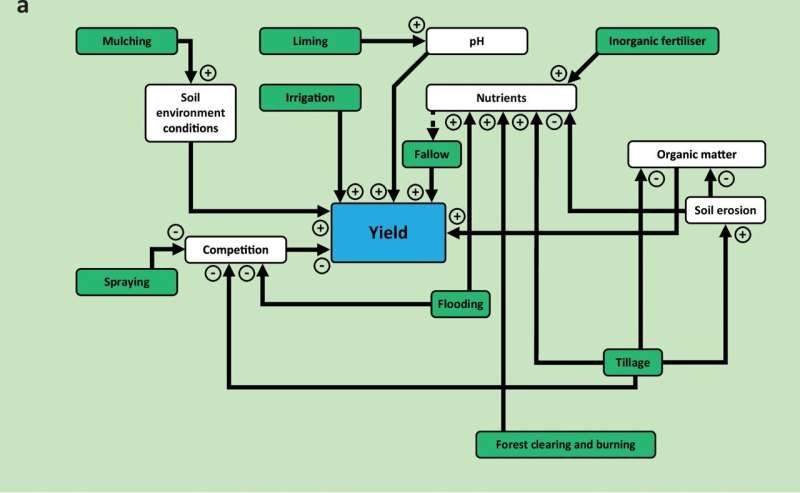
Soil resilience — the capacity of soil to withstand, adapt to, and recover from stress — is collapsing under mounting pressure from plowing, fertilizer overuse, irrigation, and chemical pollution. These practices, while boosting short-term productivity, are silently degrading the earth’s most vital natural resource.
Key Findings: The Erosion of Soil Resilience
The review synthesized decades of global data and identified the biggest threats to soil health:
-
Erosion — Accelerated by overplowing, overgrazing, and deforestation. Fertile topsoil that took centuries to form can vanish within years.
-
Salinization — Caused by excessive irrigation and poor drainage, leaving salt residues that choke plant growth.
-
Chemical contamination — Pesticides and plastic residues disrupt the microbial ecosystems essential for nutrient cycling.
-
Soil compaction — Heavy machinery and livestock trampling compress the soil, reducing its aeration, water infiltration, and root penetration.
Over time, these pressures lead to declining yields, pest outbreaks, loss of biodiversity, and increased vulnerability to drought and flooding — a cycle that threatens both livelihoods and the global food supply.
Healthy Soil: The Hidden Engine of Life
Soils support 95% of all food production and store more carbon than the world’s forests combined. When healthy, they act as carbon sinks, water filters, and biodiversity reservoirs. But when damaged, they release carbon dioxide, intensify floods, and contribute to climate change.
Lead author Dr. Alison Carswell emphasizes:
“Healthy, resilient soils are not just the foundation of food security — they are central to biodiversity and climate stability. Yet many practices we rely on today risk undermining that foundation for the future.”
The Way Forward: Balancing Yield and Resilience
The study acknowledges that not all intensive practices are harmful. Some — like liming acidic soils or flooding rice paddies — can sustain soil function if properly managed.
Moreover, sustainable approaches can reverse damage:
-
🌾 Conservation tillage to reduce erosion.
-
🐞 Integrated pest management (IPM) to minimize chemical load.
-
🌿 Crop rotation and cover cropping to rebuild organic matter.
-
💧 Precision irrigation to manage salinity and conserve water.
However, these solutions require trade-offs — balancing short-term profit with long-term ecological stability.
The message is clear: soil must be managed as a living system, not a disposable input.
A Global Warning
The UN estimates that one-third of the world’s soils are already degraded, and the loss continues at rates that could jeopardize future food supplies — particularly in vulnerable regions of sub-Saharan Africa, South America, and Southeast Asia.
If soil degradation continues unchecked, scientists warn of potential tipping points — moments when soil productivity collapses beyond recovery, leading to cascading effects on global trade, migration, and food prices.
Breaking the Cycle
Dr. Carswell concludes with urgency and hope:
“Breaking the cycle of soil degradation is possible — but it requires rethinking how we manage land, not just for yields next season, but for resilience in the decades to come.”
Key Takeaway
The world’s food future depends not only on innovation above the ground but on restoring the life beneath it.
Sustainable soil management is not optional — it’s the foundation of climate resilience, food security, and planetary health.
References:
Carswell, A., et al. (2025). Impacts of agricultural management practices in cropping systems in the short-term and in the long-term. npj Sustainable Agriculture. DOI: 10.1038/s44264-025-00098-6
Leave a Reply
You must be logged in to post a comment.