By Collins Odhiambo Owino — DatalytIQs Academy
Data Source: Kaggle (Digital Wellbeing Dataset, 2025)
Introduction
Social media isn’t just a pastime — it’s a global lifestyle.
From networking and creativity to news and entertainment, digital platforms define how we connect and express ourselves.
At DatalytIQs Academy, our analysis of a Digital Wellbeing dataset (Kaggle, 2025) reveals fascinating insights into platform popularity and the balance between online engagement and wellbeing.
Most Popular Platforms Among Respondents
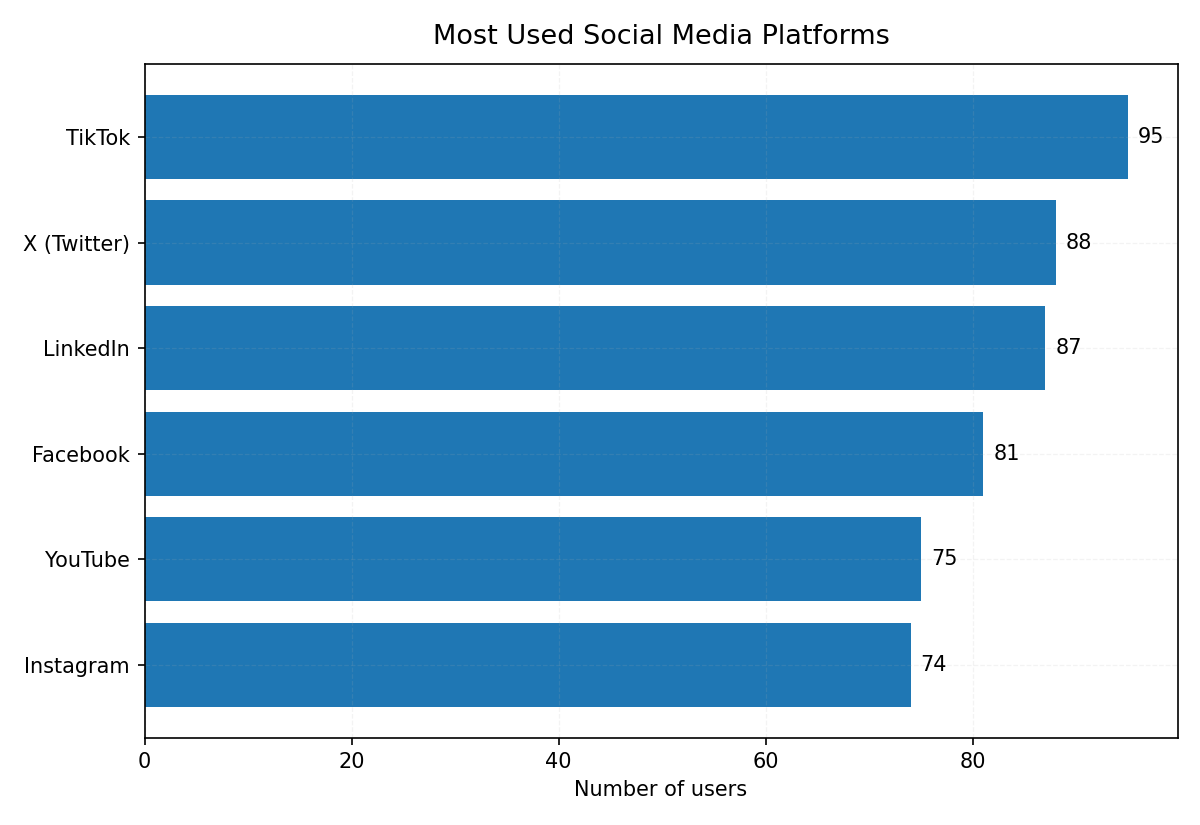
Figure 5: Most Used Social Media Platforms (Horizontal Bar Chart)
(Image Source: 5_platform_usage_horizontal_bar.png)

The visualization above shows the number of respondents using each major platform among 500 participants.
| Platform | Number of Users | Share (%) |
|---|---|---|
| TikTok | 95 | 19% |
| X (Twitter) | 88 | 17.6% |
| 87 | 17.4% | |
| 81 | 16.2% | |
| YouTube | 75 | 15% |
| 74 | 14.8% |
Interpreting the Trends
TikTok leads the pack — reflecting the rise of short-form content, creative storytelling, and algorithmic engagement.
Meanwhile, Twitter (now X) and LinkedIn remain influential for professionals and opinion leaders.
Key observations:
-
TikTok’s dominance shows how visual, fast-paced interaction appeals to younger audiences.
-
LinkedIn’s strong showing signals growing interest in professional learning and career branding.
-
Facebook and YouTube, once dominant, now hold steady middle-ground positions.
-
Instagram continues as a versatile hub for lifestyle, business, and influencer content.
These findings mirror broader global analytics from DataReportal (2025), where TikTok also tops engagement metrics in most regions.
What This Means for Digital Wellbeing
Each platform engages users differently — but with that comes varying psychological and time-use implications.
Our ongoing research at DatalytIQs Academy links platform usage patterns with:
-
Screen time duration
-
Stress levels
-
Sleep quality
-
Happiness index
Preliminary insights suggest that diverse platform use (rather than overreliance on one) correlates with higher well-being and lower digital fatigue.
Methodology
-
Dataset: Digital Wellbeing & Social Media Usage — Kaggle (2025)
-
Sample Size: 500 respondents
-
Visualization Tool: Python (Matplotlib)
-
Analysis Type: Frequency distribution (top platforms by user count)
-
Author: Collins Odhiambo Owino
-
Institution: DatalytIQs Academy — Mathematics, Economics & Finance Online School
About DatalytIQs Academy
DatalytIQs Academy combines data analytics with real-world impact.
Our courses empower learners to master data science, economics, and digital research — while exploring how technology shapes human behavior.
Visit: www.datalytiqs.academy
Email: info@datalytiqs.academy
Acknowledgement
We acknowledge:
-
Kaggle, for open-access datasets powering global research.
-
DatalytIQs Academy, for fostering data education and innovation.
-
Collins Odhiambo Owino, for leading this digital behavior analysis.
Conclusion
TikTok’s leadership and LinkedIn’s surprising rise highlight a digital world where creativity meets productivity.
But beyond trends and clicks, the real insight is balance — knowing when to scroll, when to learn, and when to log off.
Stay tuned for our next post in this series:
“Stress, Sleep, and the Happiness Paradox: What Social Media Doesn’t Show You.”
Leave a Reply
You must be logged in to post a comment.