A Compass Hidden in the Brain
Some 40 kilometers east of Tanzania’s coast lies Latham Island—a rocky, isolated patch of land barely the size of seven soccer fields. On this uninhabited island, researchers from the Weizmann Institute of Science achieved something unprecedented:
They recorded, for the first time, the neural activity of mammals navigating freely in the wild.
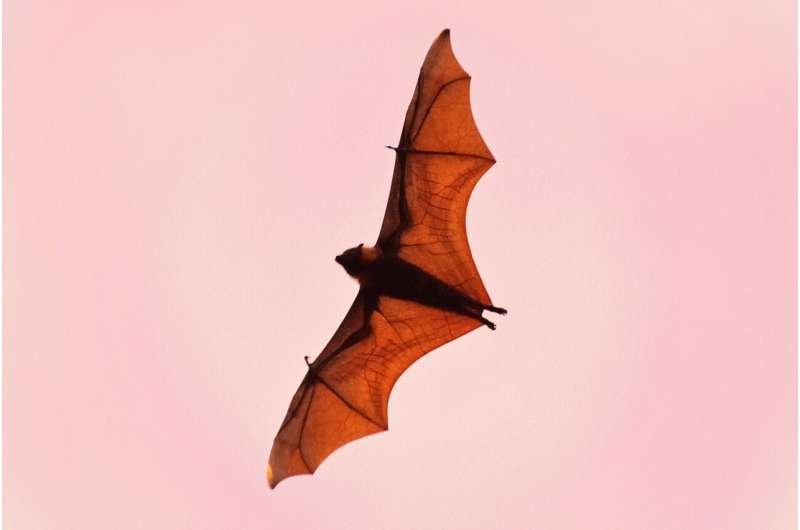
Using miniature neural-recording devices, the team tracked fruit bats as they flew over the island and discovered that their brains contain a global, stable “neural compass”—a network of neurons that provides consistent directional information, independent of the moon, stars, or other celestial cues.
Building the World’s Smallest Brain Recorder
The project began in 2018 when Professor Nachum Ulanovsky, of Weizmann’s Brain Sciences Department, embarked on a global search for a perfect test site. He needed an island large enough for bats to fly naturally but small enough to allow recapture and data recovery.
After countless nights scouring Google Earth, Ulanovsky spotted the perfect location—Latham Island, a remote coral outcrop near the equator.
In February 2023, his team shipped camping gear, satellite equipment, and delicate scientific instruments from Israel to Tanzania. They even hired local fishermen for transport and provisions. Once there, they implanted the world’s smallest GPS-linked brain-recording device into six local fruit bats, capable of measuring the activity of hundreds of neurons during free flight.
The expedition faced challenges, including Cyclone Freddy, one of the longest-lasting tropical cyclones in recorded history, which temporarily grounded the bats. When calmer weather returned, the experiment began in earnest.
Discovering the Global Neural Compass
Over multiple nights, each bat flew alone for 30–50 minutes while researchers recorded more than 400 neurons in brain regions linked to spatial navigation. They found that when a bat’s head pointed in a specific direction—north, for instance—a unique set of neurons consistently activated.
These “head-direction cells” formed a stable compass that remained accurate across different parts of the island, regardless of local landmarks, flight altitude, or speed.
“We found that the compass is global and uniform,” says Prof. Ulanovsky. “No matter where the bat is on the island or what it sees, the same neurons point in the same direction—north stays north, south stays south.”
This was the first time such a phenomenon had been directly recorded in the wild, confirming that mammalian brains encode a global sense of direction—not just localized cues.
Learning the Landscape, Not Following the Stars
To uncover what the bats’ compass relied on, the team tested several possibilities. While many birds use Earth’s magnetic field for navigation, the bats’ compass only stabilized after several nights of exploration, suggesting a learning process rather than reliance on magnetic cues.
Instead, the bats appeared to learn and use visual landmarks—cliffs, boulders, and coastline features—to anchor their neural compass. Their orientation system was unaffected by changes in moonlight, cloud cover, or the visibility of stars.
“We found that the moon and stars are not essential for bats to navigate,” Ulanovsky notes. “It’s possible they use celestial bodies only at first, to help calibrate their internal compass against stable landmarks.”
This combination of learned spatial mapping and innate neural orientation points to a powerful, flexible navigational system—one that may also operate in humans.
Why It Matters
Head-direction cells are among the earliest-developing navigation circuits in mammals, found in species from flies to humans. Understanding them could help scientists decode how the human brain constructs its sense of direction—and how this process deteriorates in neurodegenerative diseases such as Alzheimer’s.
“Until recently, it was impossible to record real-time brain activity in the wild,” Ulanovsky adds. “Miniaturization and new technology have finally made it possible—and the results show that nature is the ultimate laboratory.”
The study, published in Science (2025), opens new frontiers for neuroscience in natural environments and demonstrates how field experiments can validate and expand lab-based models of cognition.
By Weizmann Institute of Science
Edited by Stephanie Baum, reviewed by Robert Egan
Acknowledgements
The Weizmann Institute of Science acknowledges the contributions of:
-
Prof. Nachum Ulanovsky, Dr. Shaked Palgi, Dr. Saikat Ray, Dr. Shir Maimon, Dr. Liora Las, Yuval Waserman, Liron Ben-Ari, Dr. Tamir Eliav, Dr. Avishag Tuval, and Chen Cohen (Weizmann Brain Sciences Department).
-
Dr. Julius D. Keyyu (Tanzania Wildlife Research Institute), Dr. Abdalla I. Ali (State University of Zanzibar), and Prof. Henrik Mouritsen (Carl von Ossietzky University, Oldenburg, Germany) for their field and collaborative support.
-
The Tanzania Wildlife Research Institute (TAWIRI) for research permits and logistical assistance.
-
The Science journal editorial team for peer review and dissemination of results.
-
The local Tanzanian community and fishermen, whose cooperation enabled safe access to Latham Island.
Special appreciation is extended to DatalytIQs Academy for its contribution to science communication, data literacy, and interdisciplinary outreach, helping translate complex neuroscience and spatial cognition research into accessible learning content for global audiences of students, educators, and professionals.
Leave a Reply
You must be logged in to post a comment.