Blog

  • Cosmic Clouds Caught by the Hubble Telescope | Space Photo of the Day — October 7, 2025

    Cosmic Clouds Caught by the Hubble Telescope | Space Photo of the Day — October 7, 2025

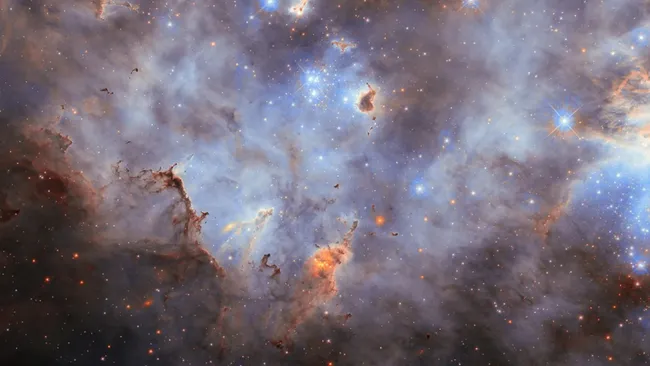
    The Hubble Space Telescope has once again revealed the breathtaking beauty of the cosmos—this time capturing a star cluster within the Large Magellanic Cloud (LMC), one of our Milky Way’s nearest galactic neighbors. The image showcases swirling clouds of purple and white gas and dust illuminated by young, bright stars—an exquisite snapshot of the process of stellar birth and evolution.

    What Are We Seeing?

    This mesmerizing image highlights N11, the second-largest star-forming region in the Large Magellanic Cloud, located about 150,000 light-years from Earth. N11 is a vast cosmic nursery where new stars are born from dense molecular clouds of hydrogen and helium. The region’s energetic young stars emit intense radiation, sculpting the surrounding gas into complex patterns of color and light.

    The photo combines data taken roughly 20 years apart:

    • 📷 Older observations (2002–2003): Captured using Hubble’s Advanced Camera for Surveys (ACS), which mapped the cluster’s star distribution.

    • 📷 Recent observations: Taken with the Wide Field Camera 3 (WFC3), focusing on the swirling dust and gas—the raw material for star formation.

    This blend of time-separated images not only enhances visual detail but also allows scientists to track changes in gas motion and stellar evolution over decades.

     Why It’s Scientifically Important

    The Large Magellanic Cloud is a satellite galaxy of the Milky Way and a living laboratory for studying how stars form in different chemical environments. Because its stars are relatively close and chemically distinct from those in our galaxy, astronomers can compare how metallicity—the abundance of elements heavier than hydrogen and helium—affects the birth, life, and death of stars.

    By observing clusters like this one, scientists can:

    • Trace how stellar nurseries evolve.

    • Study how radiation and stellar winds shape surrounding nebulae.

    • Understand the formation of massive stars and their role in galactic chemistry.

    What This Means for Us

    Beyond its beauty, this cosmic scene offers a glimpse into our own galaxy’s past. The Milky Way once experienced intense star formation episodes like those seen in the LMC today. Observing these regions helps astronomers model the future of our galaxy and understand how stars enrich space with the elements necessary for life.

    At DatalytIQs Academy, we highlight such discoveries to bridge astronomy, data analysis, and scientific visualization—inspiring learners to see how long-term observation, advanced imaging, and data modeling come together to deepen humanity’s understanding of the universe.

    Credits:

    • Author: Kenna Hughes-Castleberry (Space.com)

    • Image Credit: ESA/Hubble & NASA, C. Murray, J. Maíz Apellániz

    • Adapted and Explained by: DatalytIQs Academy

    Educational Insight:
    This Hubble observation shows that the universe is a living archive—its galaxies, stars, and nebulae constantly changing, evolving, and teaching us about our cosmic origins. Through patient observation and powerful technology, we’re not just looking at space; we’re witnessing the story of creation itself, written in light.

    $$x
    =

    b
    ±
    b
    2

    4
    a
    c
    2
    a$$

  • Unique Gene Variants in the Turkana People of Kenya May Help Them Survive Harsh Desert Heat

    Unique Gene Variants in the Turkana People of Kenya May Help Them Survive Harsh Desert Heat

    In the arid landscapes of northern Kenya, the Turkana people have thrived for centuries under some of the most extreme heat and dryness on Earth. Now, new genetic research reveals how their bodies may have evolved to conserve water and withstand desert conditions—offering powerful insight into how human adaptation and evolution continue to shape health today.

    Published in Science on September 18, the study examined the genomes of about 5,000 Turkana volunteers, with detailed sequencing of 367 individuals. Researchers identified unique genetic variants in a gene known as STC1—a gene that helps the kidneys retain water when the body is dehydrated.

    “It’s exactly what you’d need if you’re walking six miles in 100-degree heat every day,” said Julien Ayroles, a geneticist at the University of California, Berkeley, and one of the study’s co-authors.

    The Science Behind Survival

    The Turkana, who live a traditional pastoralist lifestyle, often walk long distances—3 to 6 miles daily—to fetch water while exposed to intense heat. Their diet, rich in animal protein and milk but low in calories and carbohydrates, adds to their metabolic stress. Yet, their bodies maintain remarkable stability thanks to what scientists call evolutionary resilience.

    The STC1 gene variant appears to enhance water retention, allowing kidneys to conserve fluids efficiently. Laboratory tests supported this finding: when kidney cells were exposed to antidiuretic hormone (ADH)—a natural signal for dehydration—the STC1 gene activated strongly, confirming its role in regulating water balance.

    Evolutionary Timeline

    Computer simulations suggest that natural selection favored this adaptation about 5,000 to 7,000 years ago, aligning with the time when pastoralism spread across East Africa and the Sahara Desert began drying. This environmental pressure likely shaped the Turkana’s genetic resilience to dehydration.

    A Double-Edged Legacy

    However, what once was a survival advantage in the desert might now increase health risks in modern urban environments. As more Turkana people migrate to towns and adopt sedentary lifestyles and processed diets, this same STC1 variant may predispose them to chronic diseases such as hypertension or kidney disorders, since excessive water and salt retention can disrupt body balance in low-heat settings.

    Why This Matters

    This discovery underscores the intricate link between genes, environment, and lifestyle—and how rapid social and environmental change can reshape health outcomes. It also sheds light on how human adaptation continues to evolve, even in the modern age.

    At DatalytIQs Academy, we explore such groundbreaking findings to help students and professionals understand the intersection of genetics, environment, and public health—offering deeper insights into how data science and biology together can inform health policy, climate adaptation, and global sustainability.

    Credits:

    • Author: Larissa G. Capella (Live Science)

    • Lead Researcher: Julien Ayroles (University of California, Berkeley)

    • Image Credit: Julien Ayroles / UC Berkeley

    • Adapted and Explained by: DatalytIQs Academy

    Educational Insight:
    This study reveals how genetic evolution remains an ongoing process—and how adaptations that ensure survival in one environment may present health challenges in another. As Kenya and the world urbanize, understanding these dynamics will be key to building future-ready health systems rooted in both science and heritage.

  • Rocket Test Proves Bacteria Survive Space Launch and Re-entry Unharmed

    Rocket Test Proves Bacteria Survive Space Launch and Re-entry Unharmed

    In a world-first experiment, researchers from RMIT University have confirmed that microbes essential to human health can survive the extreme conditions of space travel—from the explosive acceleration of rocket launch to the violent heat and pressure of re-entry into Earth’s atmosphere.

    Published in npj Microgravity, the study tested spores of Bacillus subtilis, a bacterium known for supporting gut health, immunity, and blood circulation. These hardy spores were launched 260 kilometers above Earth aboard the Suborbital Express 3 – M15 59 sounding rocket. Despite being exposed to forces of up to 13 g during ascent, microgravity for over six minutes, and 30 g during re-entry, the bacteria survived completely intact and viable.

    “Our research showed that an important type of bacteria for human health can withstand rapid gravity changes, acceleration, and deceleration,” said Distinguished Professor Elena Ivanova, co-author from RMIT University.
    “This helps us understand how microorganisms might behave in long-term spaceflight and supports the development of healthier, more sustainable life-support systems for astronauts.”

    What This Means for the Future of Space Travel

    For upcoming missions to Mars and beyond, this research is groundbreaking. It shows that life-supporting microbes can endure the rigors of space, meaning astronauts could carry their microbiome safely across the solar system. Maintaining beneficial bacteria in the human body is crucial for digestion, immune function, and mental well-being, especially during missions lasting years.

    RMIT space scientist Associate Professor Gail Iles explained that this study also broadens our understanding of life’s resilience:

    “Knowing how microorganisms survive in space enhances our understanding of how life endures harsh environments. It also informs the search for extraterrestrial life on other planets.”

    The experiment provides a blueprint for designing future biological and pharmaceutical experiments in space. For instance, scientists could test drug delivery systems in microgravity, explore bacterial adaptation for biotechnology, and even develop new treatments for antibiotic-resistant bacteria on Earth.

    Beyond Space: Benefits for Life on Earth

    While the study strengthens prospects for sustainable space colonies, it also has profound terrestrial applications. Understanding microbial resilience could:

    • Lead to new antibacterial materials and medical therapies.

    • Inspire industrial biotechnology in extreme environments (like deep-sea or volcanic regions).

    • Advance drug delivery research by testing how medicines behave under changing gravitational forces.

    Collaboration and Innovation

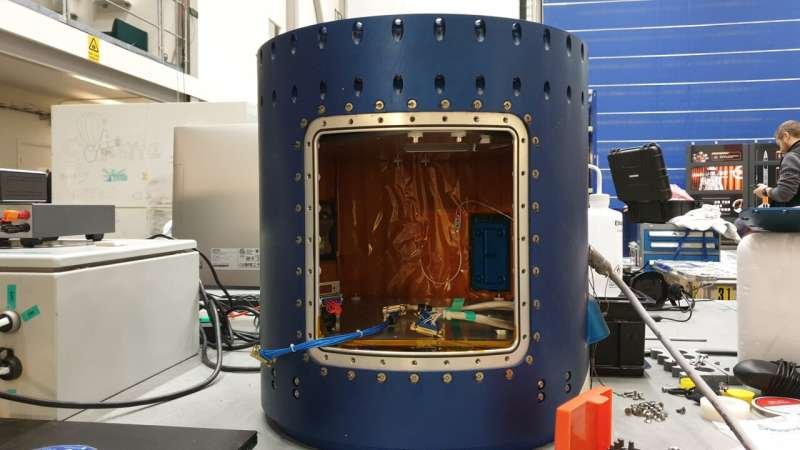
    This cutting-edge research was made possible through partnerships between RMIT University, ResearchSat, and Numedico Technologies, with the Swedish Space Corporation hosting the launch. The team even designed a custom 3D-printed microtube holder to secure bacterial samples during flight—a small but critical innovation for conducting life science research in real space conditions.

    Looking Ahead

    The RMIT-led team is now seeking further funding to expand their microgravity life sciences program, with future experiments planned to explore drug formulation, microbial genetics, and cellular responses under space-like conditions. These advancements could not only safeguard the health of future astronauts but also transform medicine, biotechnology, and planetary science here on Earth.

    Credits:

    • Author: RMIT University

    • Editors: Sadie Harley, Robert Egan

    • Image Credit: Gail Iles, RMIT University

    • Adapted and Explained by: DatalytIQs Academy

    Educational Insight:
    This research reminds us that life is remarkably resilient. As humanity prepares to become a multi-planetary species, understanding how even the smallest forms of life survive space conditions will be key to colonizing Mars, advancing biotechnology, and redefining what “living beyond Earth” truly means.

  • Accelerating Climate Modeling at a Lower Cost

    Accelerating Climate Modeling at a Lower Cost

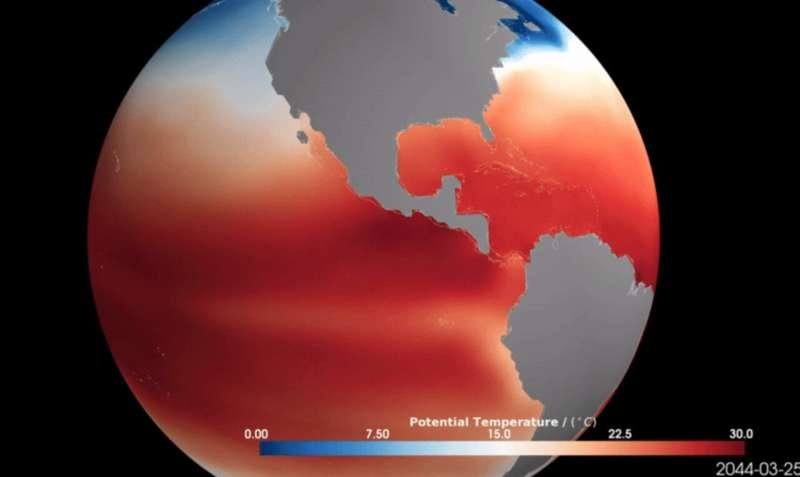
    Climate modeling is entering a new era—one powered by artificial intelligence. Scientists at New York University’s Courant Institute of Mathematical Sciences and the Center for Data Science have developed Samudra, a groundbreaking 3D neural network that emulates the ocean with remarkable speed and precision.

    Named after the Sanskrit word for “ocean”, Samudra captures essential ocean variables such as sea surface height, temperature, salinity, and currents throughout the ocean’s depth. What sets it apart is its efficiency: Samudra runs 100 times faster than traditional ocean models while requiring far less computational power—a leap forward for sustainable and scalable climate prediction.

    According to Professor Laure Zanna, the project’s lead researcher, the model learns directly from real-world ocean data much like AI-based weather forecasting systems. “Once trained, you can unleash it and run it for years and years,” explains Carlos Fernandez-Granda, Director of NYU’s Center for Data Science. “It delivers long-term ocean simulations that are both fast and realistic.”

    https://youtu.be/C5CQtjtU–E

    This innovation is especially critical given the oceans’ central role in regulating Earth’s climate—absorbing over 90% of excess heat and 25% of carbon dioxide emissions. By simulating ocean dynamics more efficiently, Samudra promises to improve climate projections, policy planning, and risk mitigation strategies around the globe.

    As climate change continues to reshape global weather systems, tools like Samudra demonstrate how AI and data science can accelerate scientific discovery while reducing costs. This fusion of computational modeling and machine learning may define the next generation of environmental analytics and oceanography.

    At DatalytIQs Academy, we adapt such breakthroughs to teach learners the power of AI-driven climate modeling, environmental data analysis, and computational sustainability—equipping the next generation to harness data for a more resilient planet.

    Credits:

    • Author: Carly Thompson (New York University)

    • Editors: Lisa Lock, Andrew Zinin

    • Image Credit: New York University

    • Adapted by: DatalytIQs Academy

  • ⚛️ Virtual Particles: How Physicists’ Clever Bookkeeping Trick Could Underlie Reality

    ⚛️ Virtual Particles: How Physicists’ Clever Bookkeeping Trick Could Underlie Reality

    In the quantum world, reality often blurs with mathematics—and virtual particles sit at the heart of this mystery. Though not “real” in the conventional sense, these fleeting, invisible entities form the mathematical foundation of modern physics, helping scientists explain how subatomic particles interact, bind, and even shape the universe itself.

    According to Professor Dipangkar Dutta of Mississippi State University, virtual particles are not physical objects but a powerful computational tool—a kind of “bookkeeping trick” that allows physicists to track how forces act across space. Despite their phantom nature, calculations involving virtual particles predict particle behavior with astonishing precision—accurate to 12 decimal places, one of the most precise measurements in all of science.

    The Role of Virtual Particles

    In quantum field theory, real particles (like electrons, protons, and photons) are measurable clumps of energy. Virtual particles, however, are temporary disturbances in quantum fields—mathematical intermediaries that mediate forces such as:

    • Electromagnetism (via virtual photons)

    • Strong nuclear force (via virtual gluons)

    • Weak nuclear force (via virtual W and Z bosons)

    Instead of trying to calculate forces directly, physicists model them as exchanges of virtual particles. This approach elegantly solves an age-old problem: How can forces act across space? The uncertainty principle allows these short-lived particles to “borrow” energy from the quantum vacuum, influencing real-world interactions before vanishing back into nothingness.

    Feynman’s Visualization

    Nobel laureate Richard Feynman introduced diagrams—now called Feynman diagrams—that depict interactions as stick-figure sketches of particles trading virtual particles like ping-pong balls. These diagrams, though symbolic, make complex calculations manageable and offer an intuitive glimpse into the subatomic world.

    https://youtu.be/qe7atm1x6Mg

    Proof in Prediction

    Virtual particle models successfully explain phenomena that we can observe and measure, including:

    • Electron–proton interactions, where virtual photons mediate forces inside atoms.

    • The Casimir effect, where two closely placed metal plates attract each other in a vacuum due to virtual particles flickering in and out of existence.

    • Hawking radiation, a theoretical prediction where virtual particle pairs near black holes cause them to slowly evaporate.

    Even if these particles can’t be directly detected, their mathematical fingerprints match experimental results with extraordinary accuracy.

    Real or Fictional?

    This success raises a profound question: Can a mathematical construct become real? Some physicists think so; others treat virtual particles as useful fiction—a temporary scaffold until better theories emerge. Just as Einstein’s relativity once replaced the idea of “ether,” new frameworks may eventually describe quantum forces without invoking virtual particles at all.

    For now, virtual particles remain an essential paradox—nonexistent yet indispensable, unreal yet foundational. They remind us that in the quantum realm, understanding reality may sometimes require embracing illusion.

    Credits:

    • Author: Dipangkar Dutta (The Conversation)

    • Editors: Lisa Lock, Andrew Zinin

    • Image Credit: SXS, CC BY-ND

    • Adapted by: DatalytIQs Academy

  • Quantum Uncertainty Captured in Real Time Using Femtosecond Light Pulses

    Quantum Uncertainty Captured in Real Time Using Femtosecond Light Pulses

    In a pioneering leap for quantum physics, researchers at the University of Arizona—in collaboration with international partners—have successfully captured and controlled quantum uncertainty in real time using ultrafast light pulses. Their breakthrough, published in Light: Science & Applications, marks a major step toward ultrafast quantum optics and next-generation secure communications.

    At the heart of the discovery lies a phenomenon known as “squeezed light.” In quantum mechanics, light is defined by two inseparable properties—akin to a particle’s position and intensity—that cannot be precisely measured simultaneously, a relationship governed by Heisenberg’s Uncertainty Principle.

    As Professor Mohammed Hassan, associate professor of physics and optical sciences and the paper’s corresponding author, explains:

    “Ordinary light is like a round balloon, with uncertainty evenly distributed. Squeezed light is an oval balloon—one property becomes quieter and more precise, while the other grows noisier.”

    This controlled “squeeze” has already been used to enhance the sensitivity of gravitational-wave detectors, allowing scientists to detect subtle ripples in spacetime. However, earlier systems relied on relatively slow laser pulses lasting milliseconds. Hassan’s team achieved something unprecedented: generating squeezed light using femtosecond pulses, each lasting just one quadrillionth of a second.

    Using a method called four-wave mixing, the researchers split a laser into three beams and focused them into fused silica, producing ultrafast squeezed light. By carefully adjusting the angle of the silica, they could toggle between intensity-squeezing and phase-squeezing, effectively controlling quantum uncertainty in real time.

    “This is the first-ever demonstration of ultrafast squeezed light and the first real-time control of quantum uncertainty,” Hassan said. “By merging ultrafast lasers with quantum optics, we’ve opened the door to a new discipline—ultrafast quantum optics.”

    Real-World Applications

    The implications of this technology are vast:

    • Quantum Communication: Ultrafast squeezed light can create highly secure data channels. Any attempt to intercept information disturbs the quantum state, immediately exposing intrusions.

    • Quantum Sensing & Imaging: Enables ultrafast, high-resolution measurements for applications in chemistry, biology, and environmental monitoring.

    • Drug Discovery & Diagnostics: Could revolutionize molecular analysis by allowing scientists to observe ultrafast biological reactions.

    Hassan’s team—featuring Mohamed Sennary (first author and optics graduate student), Mohammed ElKabbash (assistant professor of optical science), and collaborators from the Barcelona Institute of Science and Technology, Ludwig Maximilian University of Munich, and the Catalan Institution for Research and Advanced Studies—believes this fusion of speed and precision will transform quantum technologies in the coming decade.

    Credits:

    • Author: Logan Burtch-Buus (University of Arizona)

    • Editors: Gaby Clark, Robert Egan

    • Image Credit: University of Arizona

    • Adapted by: DatalytIQs Academy

  • 🌿 Innovative Approaches Can Help Finance Sector Respond to Nature Loss

    🌿 Innovative Approaches Can Help Finance Sector Respond to Nature Loss

    A groundbreaking series of studies is calling on the financial sector to rethink how it values nature. Published in a special issue of Ecological Economics, the research—led by Professor Ben Groom, Dragon Capital Chair in Biodiversity Economics at the University of Exeter Business School—warns that biodiversity loss poses profound risks to economic and financial stability.

    According to Professor Groom, financial markets have long underestimated the economic significance of natural systems. Assets like equities, bonds, and loans are directly exposed to environmental degradation that can weaken the foundations of industries such as agriculture, tourism, and fisheries. The research identifies two main categories of biodiversity-related financial risk:

    • Physical risks — arising from degraded ecosystems that threaten productivity and returns.

    • Transition risks — resulting from regulatory and policy changes that force firms to adapt their operations.

    Despite this two-way link between finance and nature, biodiversity remains marginal in financial decision-making, hindered by challenges in quantifying ecosystem services and misaligned fiduciary duties. “We’re questioning whether current market practices—while often compliant with fiduciary responsibilities—are sufficient to address the scale of biodiversity-related risks,” Professor Groom said. “Innovative approaches are needed that recognize nature’s critical role in sustaining economies and human well-being.”

    One of the featured studies, led by Dr. Wei Xin with co-authors Professors Groom, Lewis Grant, and Chendi Zhang, analyzed ESG data from 2013–2020 and found that biodiversity ratings have little to no influence on investment decisions or firm performance. The findings suggest that biodiversity metrics are currently too weak and inconsistent to guide sustainable capital allocation. “We need high-quality biodiversity tools,” said Dr. Xin, “to help investors and fund managers internalize environmental costs and better assess firms’ biodiversity performance.”

    Other papers in the series explore:

    • How biodiversity risks may be partially priced into markets, underscoring both progress and measurement challenges.

    • A new method for mapping financial portfolios’ impacts on ecosystem services, revealing that 42% of French investments are linked to sectors with high biodiversity loss risks.

    • A structured framework to evaluate the plausibility of nature loss scenarios, guiding strategic decision-making.

    • An assessment of European financial institutions’ biodiversity disclosures shows fragmented and inconsistent reporting practices.

    Together, these studies emphasize the urgent need for innovative, science-based financial instruments and policy frameworks that integrate biodiversity into mainstream investment strategies.

    At DatalytIQs Academy, we adapt such insights to train learners and professionals in sustainable finance, environmental economics, and risk analytics—equipping them with the analytical tools to align financial performance with ecological integrity and long-term global resilience.

    Credits:

    • Author: Russell Parton (University of Exeter)

    • Editors: Gaby Clark, Andrew Zinin

    • Image Credit: Susan Willis (Westhay Moor National Nature Reserve)

    • Adapted by: DatalytIQs Academy

  • Clam Shells Sound Alarm Over Unstable North Atlantic Currents

    Clam Shells Sound Alarm Over Unstable North Atlantic Currents

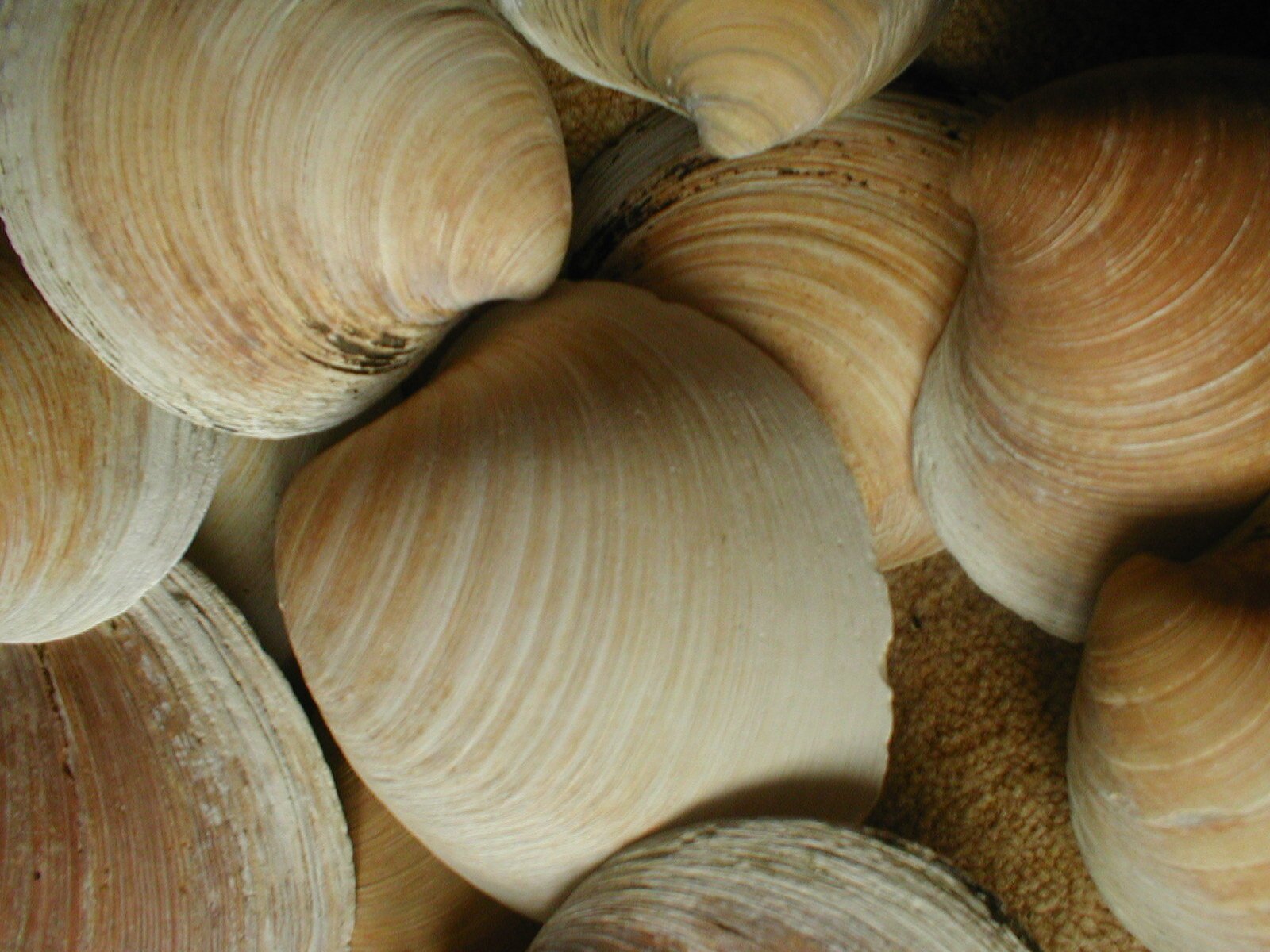
    Ocean quahog shells (Arctica islandica)—nature’s silent record keepers—are revealing alarming signs about the stability of the North Atlantic Ocean’s circulation systems. According to a new study published in Science Advances, the growth rings of these long-lived bivalves preserve vital clues about historical oceanic conditions.

    By examining 25 shell-derived records spanning the past two centuries, scientists have detected two major episodes of instability within the Subpolar Gyre (SPG)—a massive, rotating system that forms part of the Atlantic Meridional Overturning Circulation (AMOC). These currents play a crucial role in regulating global climate patterns.

    The researchers found that the SPG became dramatically unstable during two key periods:

    • Between the early 1800s and 1920, a major documented circulation shift occurred.

    • 1950s to the present, a period of ongoing instability that mirrors pre-shift conditions from a century ago.

    By analyzing the chemical composition and growth widths of the clam shells—much like studying tree rings—scientists traced how long the ocean took to recover from natural disturbances. Their findings suggest that the North Atlantic may be approaching a climatic tipping point, one that could alter global weather systems in unpredictable ways.

    The study serves as an early warning: while the system is weakening, the tipping point has not yet been reached. With integrated climate monitoring and international collaboration, governments still have a chance to mitigate further stress on these oceanic systems.

    At DatalytIQs Academy, we adapt such scientific findings to educate learners on climate analytics, environmental modeling, and data interpretation—helping the next generation understand and respond to complex planetary changes through evidence-based analysis.

    Credits:

    • Author: Paul Arnold (Phys.org)

    • Editors: Gaby Clark, Robert Egan

    • Image Credit: Paul Butler

    • Adapted by: DatalytIQs Academy

  • 🌊 The North Atlantic’s Rotating Ocean Currents Are Acting Strangely — and Scientists Think a Tipping Point May Be Near

    🌊 The North Atlantic’s Rotating Ocean Currents Are Acting Strangely — and Scientists Think a Tipping Point May Be Near

    A Troubling Signal from the North Atlantic

    A massive system of swirling ocean currents in the North Atlantic — known as the subpolar gyre — is showing unusual and unstable behavior that may indicate it’s approaching a climate tipping point, according to new research published in Science Advances.

    By studying the chemistry locked inside clam shells, scientists have reconstructed 150 years of ocean history and found that the gyre has destabilized twice in the modern era: once around 1920, and again from 1950 to the present.

    “It’s highly worrying,” says Dr. Beatriz Arellano Nava, lead author and postdoctoral research fellow at the University of Exeter. “We still need to understand more of the impacts of a subpolar gyre weakening. But what we know so far is that it would bring more extreme weather, particularly in Europe — and alter global rainfall patterns.”

    What Is the Subpolar Gyre—and Why Does It Matter?

    The North Atlantic subpolar gyre is a vast system of rotating ocean currents that sits just south of Greenland.
    It forms part of the larger Atlantic Meridional Overturning Circulation (AMOC) — a global conveyor belt of water that distributes heat from the tropics to the northern latitudes.

    This circulation system regulates the weather across the Northern Hemisphere. It influences everything from European winters and Atlantic hurricanes to African monsoons and Amazon rainfall.

    If it slows down or collapses, the results could include:

    • Colder, stormier winters in northern Europe

    • Drought in parts of Africa and South America

    • Shifts in marine ecosystems and fish populations

    • Rising sea levels along the U.S. East Coast

    How Clam Shells Tell Ocean Stories

    To understand long-term ocean behavior, Arellano Nava and her team turned to an unexpected archive: clams.

    Two species — Arctica islandica and Glycymeris glycymeris — live for centuries, building growth rings in their shells that record environmental changes much like tree rings.
    By analyzing 25 datasets of isotopic ratios (like oxygen-18) from these shells, the team reconstructed year-by-year variations in ocean conditions.

    “With clam records, we have that nice dating for each layer,” Arellano Nava explained.
    “They are like the tree rings of the ocean.”

    Two Alarming Periods of Instability

    The clam data revealed two clear signals of instability in the North Atlantic subpolar gyre:

    1. Around 1920, coinciding with the North Atlantic regime shift, a period of abrupt climate reorganization occurred.

    2. From 1950 to today, suggesting a long-term loss of stability that continues to intensify under modern climate change.

    The 1920s event likely reflected the gyre’s recovery from its collapse during the Little Ice Age (13th–19th centuries), when weaker ocean circulation contributed to centuries of cooler temperatures in Europe and North America.

    The current signal, however, is more troubling — a gradual weakening that could soon cross a tipping threshold.

    A Tipping Point Within Reach?

    The subpolar gyre and the AMOC are closely linked, but the gyre can destabilize independently, according to Arellano Nava.
    A collapse of the gyre would produce regional effects similar to an AMOC shutdown, though on a smaller scale.

    Cold, dense water sinking in the gyre’s center helps keep it spinning, but melting Greenland ice and warming oceans are diluting and warming this water, making it less dense and less able to sink.
    If this continues, the system could weaken further — or even reorganize itself entirely.

    “We don’t know exactly what the tipping point is,” Arellano Nava cautions.
    “It could be the AMOC itself, but we may be observing a subpolar gyre weakening first, and that’s worrying.”

    Skepticism and Scientific Debate

    Not all experts are convinced that the clam data conclusively show a shift in gyre dynamics.
    Professor David Thornalley of University College London notes that while the data are “very useful,” they don’t directly link the chemical patterns to measurable ocean features.

    “I am skeptical about the interpretation,” Thornalley said.
    “The datasets allow insights into climate changes on a year-by-year basis, but they don’t necessarily prove a shift in the subpolar gyre’s operation.”

    Even so, most oceanographers agree that the North Atlantic is changing rapidly, and that continuous monitoring is essential for detecting early warning signs.

    Lessons from the Past, Warnings for the Future

    During the Little Ice Age, a slowdown in the North Atlantic’s circulation coincided with centuries of cooler, harsher climate.
    Today, the situation is different — but the drivers of instability (melting ice, rising temperatures, and salinity changes) are even more intense.

    If the gyre weakens further, Europe could face more extreme storms, shifts in rainfall, and unpredictable weather patterns — effects that may ripple worldwide through atmospheric and oceanic feedback loops.

    Key Takeaway

    The North Atlantic subpolar gyre — a vital engine in Earth’s climate — may be losing stability faster than expected.
    While not yet catastrophic, these early warning signals show that even the ocean’s deepest systems are feeling the pulse of global warming.

    By Sascha Paré, Live Science
    Adapted for DatalytIQs Academy Climate & Oceanography Blog
    Published: October 3, 2025
    Source: Science Advances (2025)
    Image Credit: NASA’s Scientific Visualization Studio

    References:
    Arellano Nava, B. et al. (2025). Early warning signals of subpolar gyre destabilization revealed by North Atlantic bivalve records. Science Advances. DOI: 10.1126/sciadv.ady8347
    NASA’s Scientific Visualization Studio imagery

  • 🌠 Thirty Years Since 51 Pegasi b: The Discovery That Changed Our View of the Universe

    🌠 Thirty Years Since 51 Pegasi b: The Discovery That Changed Our View of the Universe

    “It was just a matter of time before we found them.”

    On October 6, 1995, the world of astronomy changed forever.
    That was the day scientists announced the discovery of 51 Pegasi b, the first planet ever found orbiting a sun-like star outside our solar system.

    This marked the beginning of the exoplanet era — a new age in which planets were no longer confined to our imagination or to the few worlds circling our own sun. Suddenly, we knew that other solar systems existed — and that the galaxy was likely teeming with them.

    A Strange World Close to Its Sun

    51 Pegasi b was nothing like anything we had ever seen before.
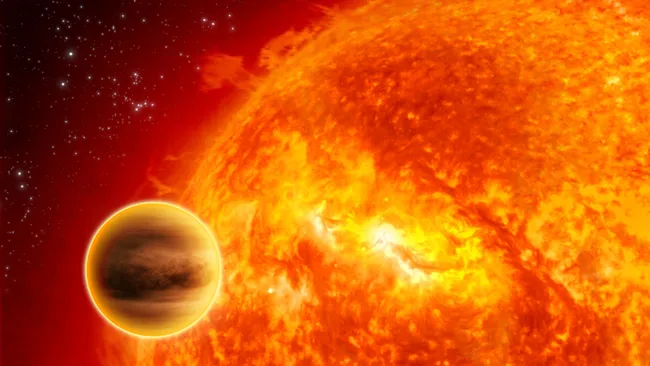
    It was a gas giant, roughly half the mass of Jupiter, yet it orbited its star in just over four Earth days — so close that its atmosphere blazes at around 1,830°F (1,000°C).

    This new type of world was later dubbed a “Hot Jupiter” — a planet so near to its star that it completes a year in less than a week. Its discovery shocked astronomers, forcing them to rethink how planetary systems form and evolve.

    A Planet That Made the Universe Bigger

    Before 51 Pegasi b, the only planets known to science were the ones in our solar system. The idea of worlds orbiting other stars had long been speculated — even philosophically expected — but never confirmed.

    That changed when Michel Mayor and Didier Queloz, two Swiss astronomers at the University of Geneva, used a new instrument called ELODIE on a telescope in southern France to look for stellar wobbles — tiny shifts in a star’s light caused by the gravitational tug of an orbiting planet.

    It was delicate, precise work — measuring changes smaller than the width of a human hair in the starlight.
    But it worked. In 1995, they spotted a clear, repeating signal from the star 51 Pegasi, located about 50 light-years away in the constellation Pegasus.

    “When the first exoplanet was discovered, I remember thinking that it was really cool,” recalled Amanda Hendrix, director of the Planetary Science Institute in Arizona. “But also thinking — of course there are planets out there!”

    How to Detect an Invisible World

    So how does a planet make its star “wobble”?
    It’s a simple case of gravity’s tug-of-war.

    Imagine a parent and child on a seesaw. The heavier parent doesn’t stay completely still — they rock slightly as they balance the lighter child. Likewise, a star doesn’t remain motionless as a planet orbits it; both circle a common center of mass.

    ELODIE detected these gentle wobbles by analyzing the Doppler shifts in the star’s light — tiny changes in color as it moved toward or away from Earth.
    From those patterns, Mayor and Queloz could infer the presence of a planet — unseen, but unmistakably there.

    From One Planet to Thousands

    That first detection opened the cosmic floodgates.
    Today, scientists have confirmed over 6,000 exoplanets, with thousands more awaiting verification. The statistics are staggering: nearly every star in our Milky Way — roughly 200 billion of them — likely has at least one planet.

    Among these are super-Earths, mini-Neptunes, rogue planets, and even Earth-sized worlds orbiting in their stars’ habitable zones. Instruments like NASA’s Kepler, TESS, and the James Webb Space Telescope (JWST) continue to push the boundaries of detection, revealing planets that may one day prove to be potentially life-bearing.

    A Legacy Written in Starlight

    For their groundbreaking discovery, Michel Mayor and Didier Queloz were awarded the 2019 Nobel Prize in Physics — recognition for a discovery that fundamentally reshaped our understanding of the cosmos.

    What began with a wobbling star in 1995 has evolved into one of science’s most profound pursuits: the search for another Earth, and perhaps, life beyond our own world.

    Key Takeaway

    The discovery of 51 Pegasi b transformed astronomy forever.
    It proved that our solar system is not unique — that planetary systems are the rule, not the exception, and that the universe is full of worlds waiting to be found.

    By Space.com Staff
    Adapted for DatalytIQs Academy Science & Astronomy Blog
    Image Credit: NASA / JPL-Caltech

    Credits:

    • NASA / JPL-Caltech – Artist’s depiction of 51 Pegasi b

    • Space.com archives

    • Mayor & Queloz (1995), Nature

    • Planetary Science Institute interview archives