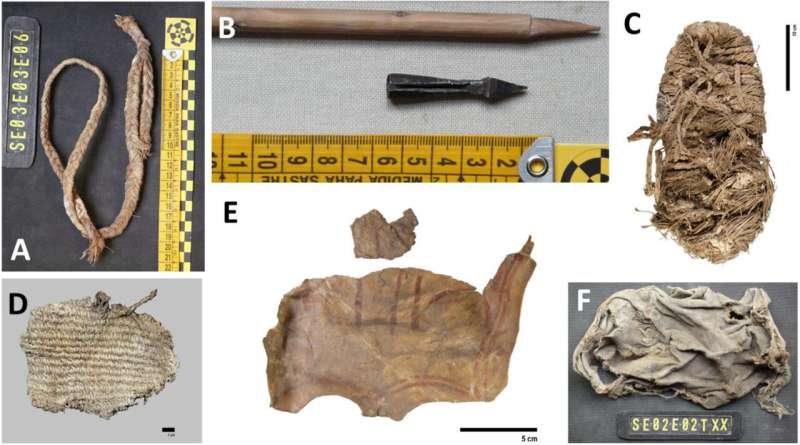

A recent study published in Ecology (2025) has unveiled an extraordinary discovery hidden high in the cliffs of southern Spain — ancient Bearded Vulture nests containing centuries-old cultural artifacts, some dating back more than 650 years.
The Bearded Vulture (Gypaetus barbatus), a rare and majestic scavenger of Europe’s mountain ranges, is already known for its peculiar habits. It feeds mostly on bones, builds massive nests out of sticks and wool, and reuses these cliffside homes for generations. But what researchers uncovered between 2008 and 2014 reveals that these birds might also be unexpected custodians of human history.
A Window Into the Past
In a detailed archaeological-style excavation of 12 ancient vulture nests, scientists unearthed 226 human-made artifacts — including woven sandals, a crossbow bolt, a decorated piece of leather, and a wooden lance. Carbon-14 dating placed some items as far back as the 14th century, effectively transforming these nests into natural time capsules of Mediterranean life.
The Perfect Preservation Chambers
The caves and rock shelters where these birds nest are typically dry, cool, and protected — ideal for preserving organic materials that would normally decay. The nests, layered with droppings and debris accumulated over centuries, acted like mini-museums, maintaining not only the vultures’ biological traces (bones, hooves, eggshells) but also clues to human activity across time.
Bridging Ecology and Anthropology
Beyond the fascination of finding medieval footwear in a bird’s nest, this discovery carries deeper scientific significance. The remains provide valuable data on ecological shifts, animal diversity, and human presence in the region over hundreds of years. The researchers note that such sites could help scientists reconstruct past ecosystems, informing modern conservation and reintroduction efforts for endangered species like the Bearded Vulture.
Nature as an Unlikely Historian
This study challenges us to see nature not just as a living system but as a long-term archive of human and environmental interaction. The Bearded Vulture, unwittingly collecting fragments of human life in its nesting rituals, becomes both a symbol of ecological resilience and a partner in preserving history.
Reflection
The discovery reminds us that the boundary between human and natural history is far thinner than we often imagine. Just as archaeologists dig through ruins to uncover civilization’s past, ecologists can now turn to the animal world — where centuries of nesting, hunting, and scavenging quietly document stories of both species and societies.
Sources:
Kasal, K. (2025). Bearded Vulture nests found to have hoards of cultural artifacts—some up to 650 years old. Phys.org.
Published in Ecology (2025), DOI: 10.1002/ecy 70191.
Leave a Reply
You must be logged in to post a comment.